

Finding Your Way Through
Our journey through this life is never smooth.
This is one part of being human that connects us all.
Life can be beautiful, surprising, messy and painful — sometimes all at once.
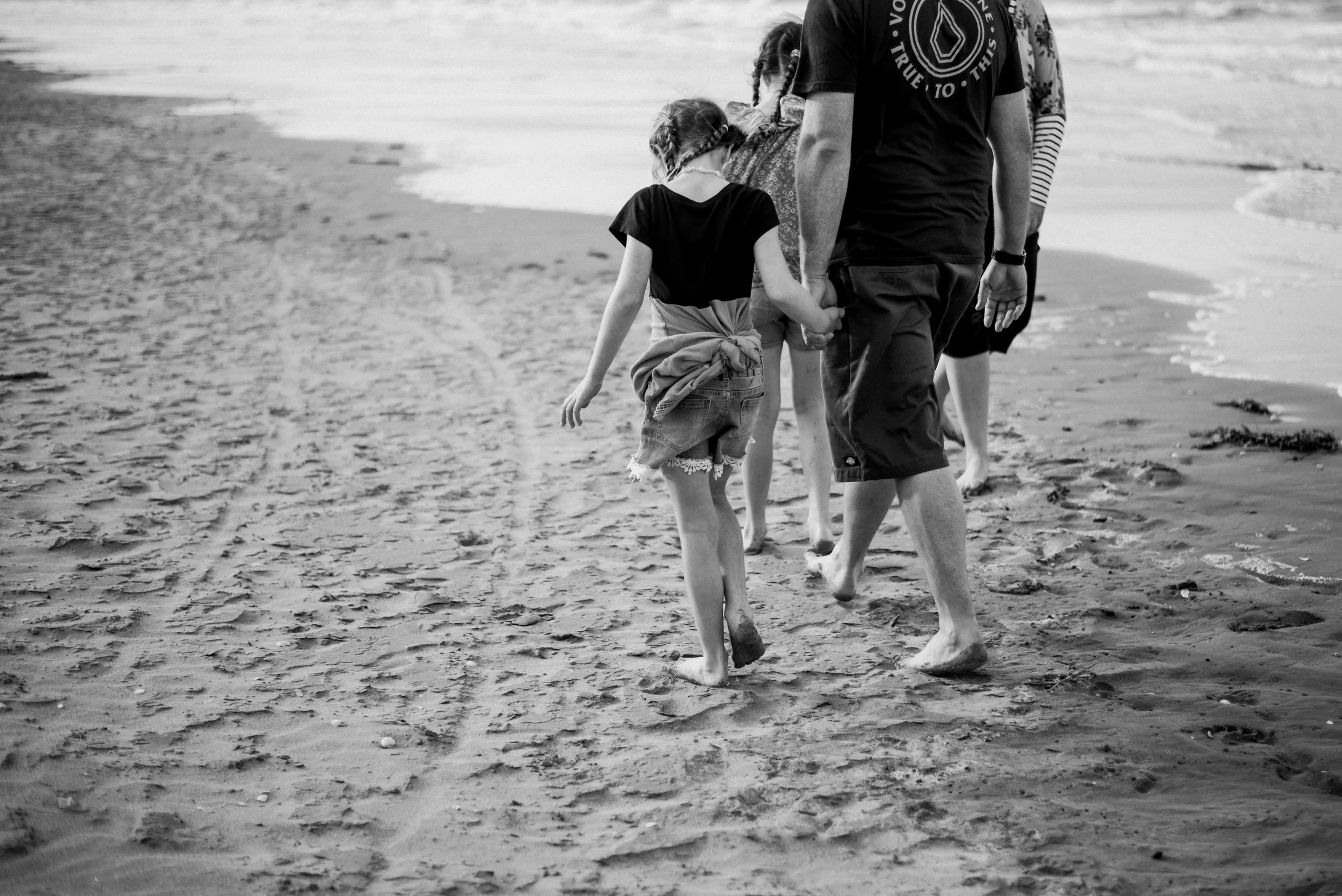
For some of us, this path resembles a rocky coastline, with long stretches of large boulders, blustery winds and surging waves between the sanctuary of a sheltered beach.
For some of us, the intersecting elements that make us the unique person we are also mean we are more likely to have experienced significant challenges or harm in a world that isn't designed for us or hasn't always been safe-enough for us.


When the things that helped you
survive stop helping
You might have learned to perform. To mask. To dissociate. To people-please. To stay busy, stay small, stay agreeable or stay one step ahead.
You may have developed whatever tools were available to soothe the discomfort, pain or perhaps agony that lives inside you.
These strategies often make sense when we understand what they have helped you navigate.
But sometimes, the things that once protected us aren't working anymore. Perhaps life has changed. Perhaps you have changed.
You might find yourself wondering why you feel the way you do, why relationships can be so difficult, or why your body and mind seem to respond to things that other people appear to take in their stride.
You don't have to figure this out alone.
At Songbird Psychology, we offer a welcoming, compassionate online space to begin making sense of what has happened — and to explore what healing might look like for you.
Trauma is, in many ways, what is left behind.
It can change the way you feel about yourself, the way you relate to other people, and the way you experience the world around you.
It can leave you feeling disconnected from your body, uncertain about your own experiences, constantly on alert, overwhelmed by emotions — or disconnected from them altogether.
Sometimes it can feel as though you are living alongside yourself rather than fully inhabiting your life.
There is no single way trauma looks.
And there is no single way to recover.
Trauma is more than what happened
Trauma can take many forms.
It can follow childhood abuse or neglect, bullying, sexual assault, domestic or family violence, coercive control, a car accident, the loss of someone you love, experiences within high-control groups, difficult experiences with healthcare or other systems, or events surrounding pregnancy and birth.
But trauma isn't simply the event itself.
Two people can experience the same event and be affected in very different ways. Something that overwhelms one person may not overwhelm another. Our histories, relationships, identities, bodies, nervous systems, resources and environments all shape the ways we respond.
A different way forward
At Songbird Psychology, we understand that healing from trauma is rarely straightforward.
Recovery and healing isn't always a neat progression. It can be unexpected and non-linear. There may be steps forward, steps sideways and times when you need to rest.
Our approach is grounded in professional psychological knowledge and skills, alongside an understanding of the lived realities of trauma and interpersonal harm.
We aim to create a therapeutic relationship where you can feel respected, believed and understood.
Together, we can work towards understanding the patterns that have developed throughout your life — not as flaws or failures, but as responses that have had a purpose.
Therapy isn't about erasing your history or forcing you to relive painful experiences.
It's about helping you develop greater understanding, choice and connection, at a pace that respects where you are now.
We work with adults who have experienced
Childhood abuse, neglect, or emotionally mis-attuned parents and caregivers
Domestic, family or intimate partner violence
Coercive control
Sexual assault, sexual abuse or childhood sexual abuse
Spiritual or religious abuse
Cults and high-control groups, including families that operate in these ways
Grief and loss
Dissociation and dissociative identities
Birth and antenatal trauma
Adjustment and life-transition difficulties
Parenting differences and difficulties
Trauma arising from systems, including therapy, healthcare, education, welfare and legal systems
Experiences that may be understood as PTSD or Complex PTSD
You don't need to have the right words for what happened to you.
You don't need to know whether your experience "counts" as trauma.
And you don't need to arrive at your first appointment with everything worked out.


You are more than
what happened to you
Sometimes, after trauma, life can become organised around getting through the next moment.
Healing can create space for something else.
Space to understand yourself with more compassion. Space to recognise your needs. Space to build relationships that feel safer and more reciprocal. Space to experience your body and emotions differently. Space to discover that the strategies you developed to survive can be understood rather than judged.
There may still be rocky coastlines.
There may still be strong winds and unexpected waves.
But there can also be sheltered beaches.
There can be connection, curiosity, laughter, creativity and hope.
There can be moments that remind you that your life is more than the difficult things that have happened to you.
At Songbird Psychology, we believe healing is not about becoming someone else.
It is about having the opportunity to become more fully yourself.
If you're ready to explore whether therapy with us might be right for you, we'd be glad to hear from you.